







Information Resource Center
INFORMATION RESOURCE CENTE
Public Resources (Lifelong Learning)
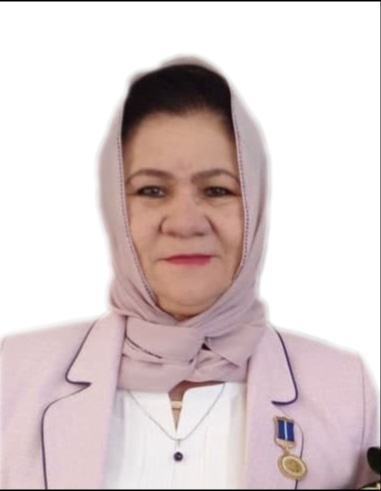 |
Yuldasheva Marguba Melievna | |
| Post: | Head of of the Center | |
| Reception hour: | Every day (11:00-13:00) | |
| Tel.: | 71 252-65-84 | |
| E-mail: | marguba_yuldasheva@tsuos.uz | |
Tashkent State University of Oriental Studies (TSUOS) is committed to the principles of lifelong learning and the democratization of knowledge. The university provides access to its educational and informational resources not only for students and faculty but also for the wider public. This initiative serves to expand continuous learning opportunities for people of all ages. In addition, the university organizes free courses for university students, people in need, and anyone wishing to enhance their education and knowledge.
In order to implement the Decree of the President of the Republic of Uzbekistan dated June 20, 2006, No. 81 “On the organization of providing the population of the Republic with information and library services,” and based on the Order of the Ministry of Higher and Secondary Specialized Education of the Republic of Uzbekistan dated December 29, 2006, No. 295, the Information Resource Center (IRC) of TSUOS was established.
Currently, the IRC consists of five departments:
Scientific, methodological, and informational department (periodicals);
- Department of acquisition, cataloguing, and systematization of information and library resources;
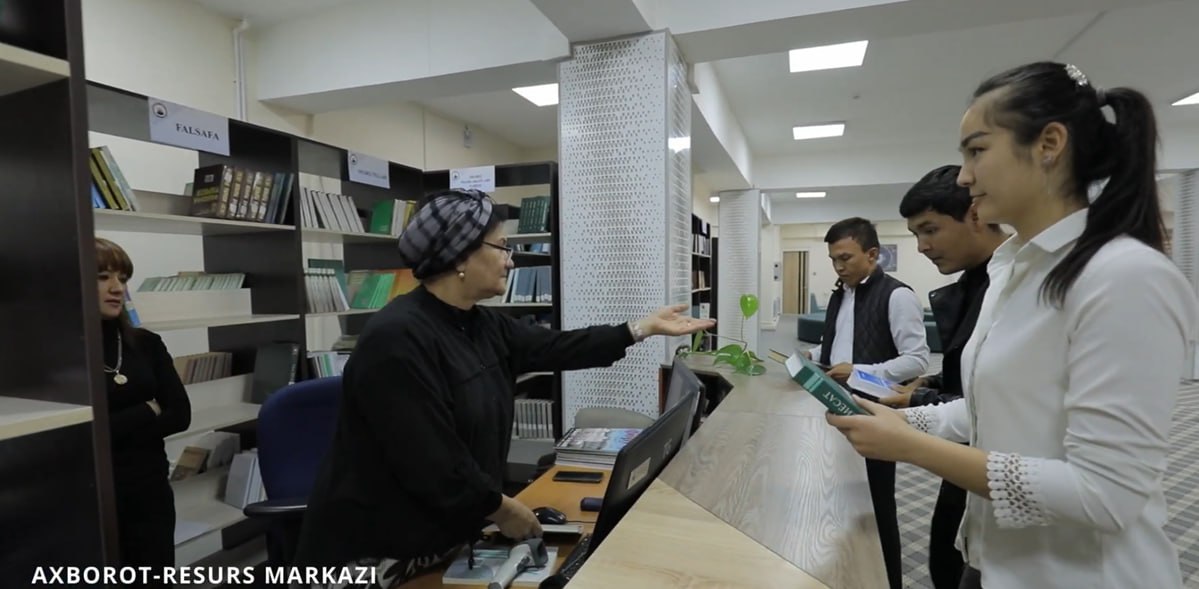
- Department of library and information services (including user services, reading rooms, and book storage);
- Department of electronic information resources;
- Department of foreign information resources.
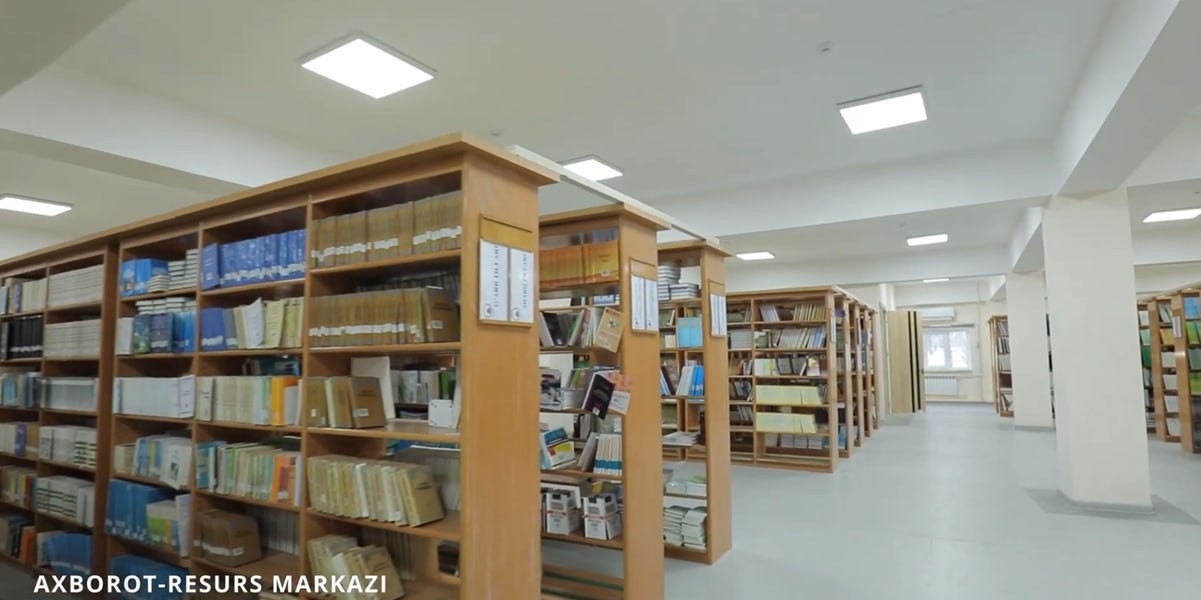
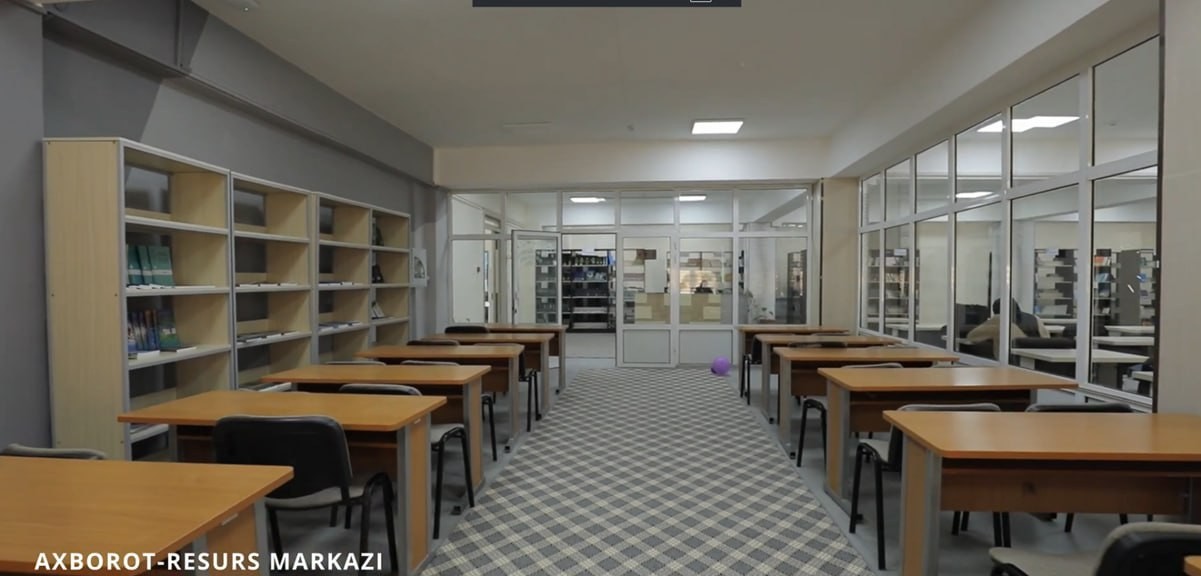
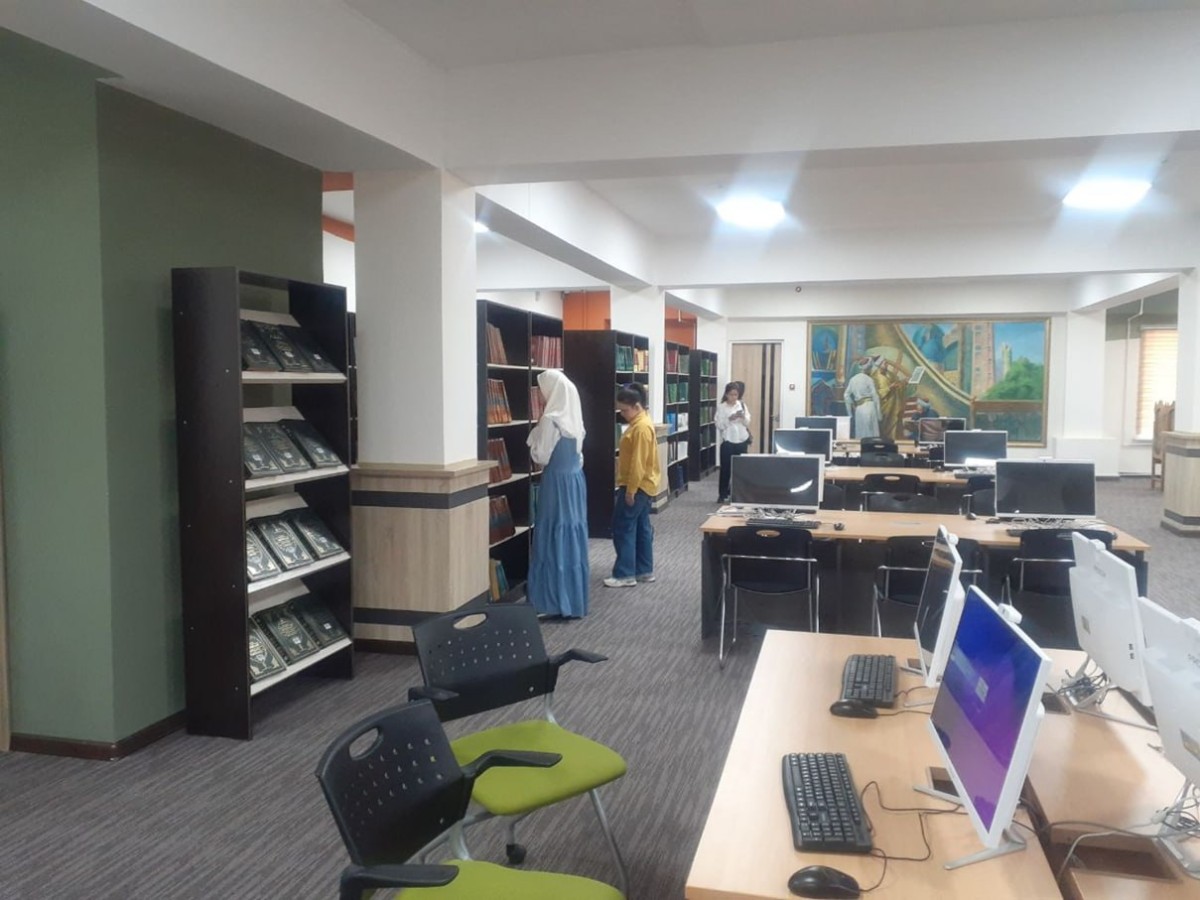
The IRC of TSUOS has eight reading rooms with a total capacity of 350 seats. In addition, libraries are also organized in student dormitories and at several language departments of the university. The Information Resource Center is equipped with modern technical facilities: 2 servers, 7 scanners, 5 copiers, 10 printers, and 125 computers connected to the Internet. Among them, 102 computers are allocated for access to electronic catalogues and e-books.
The IRC operates based on the “IRBIS32” software system. Barcodes that read ID numbers assigned to all registered users and library materials are used for automated registration and tracking of book loans. Through barcode scanners, the library manages visitor statistics and book circulation. A3-format high-speed scanners are used to digitize printed materials, and the digital versions are systematically added to the electronic catalogue.
A complete registration and distribution system for the library collection has been established, along with an electronic database of readers. All library materials are marked with barcodes. Using the FAIN Reader software, the university scans and creates electronic copies of textbooks and rare books — over 40000 digitized titles are now available in the electronic catalogue.
The IRC contains textbooks and manuals for all university disciplines, as well as literature on political, social, and economic sciences, published in Uzbek, Russian, Western, and Eastern languages.
The university maintains regular monitoring of textbook provision for each program and allocates funds annually to publish or purchase necessary educational and scientific materials.
University Library
The TSUOS library operates as an open learning center for the local community. Most of its collection consists of textbooks, teaching aids, fiction, scientific books, articles, and journals — available in print, electronic, and audio formats. Currently, TSUOS students, faculty members, foreign students, and external users who are not part of the university can freely use the Information Resource Center upon presenting a passport.
The library holds 134906 books in 19090 titles, including 99492 textbooks and manuals, 21029 monographs, and 12080 works of fiction in Uzbek and foreign languages. In addition, the library subscribes to 12 newspapers, 20 journals, and provides access to 372 academic papers.
Visitors who are not university members are granted access to reading rooms and information services upon following internal regulations. The following table shows the number of users of the library for the academic year 2024–2025:
| Total Users | Students | Teachers | Number of employees | External Users |
|
6031 |
5287 |
329 |
250 |
165 |
Electronic Resources
In addition to printed publications, TSUOS offers an electronic library containing over 19620 digital resources in disciplines such as oriental studies, linguistics, world politics, economics, and pedagogy.
This platform is freely accessible to everyone via the university website, allowing students, teachers, and researchers to use reliable academic materials. https://dilib.tsuos.uz/
The Hemis (hemis.tsuos.uz) automated credit-module management system and the Moodle (mt.tsuos.uz) online learning platform also operate in full capacity for all users. Server rooms are well equipped to maintain stable access, and faculty and staff are provided with Wi-Fi and ICT tools.
Digital Learning Initiatives
University professors and PhD scholars regularly deliver open lectures and discussions on various topics. All users may access computers and the Internet in the Information Resource Center.
Additionally, users can access materials through TSUOS’s official website (tsuos.uz) and social media platforms:
- Facebook: fb.com/tsuos.uz
- Instagram: instagram.com/tsuos.uz
- YouTube: youtube.com/c/tsuos
- Telegram: https://t.me/tsuos
Over 3000 video lectures prepared by university professors are available on the TSUOS YouTube channel.
TSUOS’s Role in Lifelong Learning
Through these initiatives, TSUOS serves as a strong bridge between academia and society. By ensuring free access to high-quality educational resources — in both printed and digital formats — the university inspires individuals toward personal and professional growth and contributes to achieving the goals of inclusive and equitable education for all.
Social networks:
