








16.2.5. UNIVERSITY PRINCIPLES ON CORRUPTION AND BRIBERY
16.2.5. UNIVERSITY PRINCIPLES ON CORRUPTION AND BRIBERY
Tashkent State University of Oriental Studies (TSUOS) is firmly committed to fostering a culture of integrity, transparency, and ethical conduct across all its academic, administrative, and community activities. Guided by its core values—honesty, accountability, respect, and fairness—TSUOS actively implements measures to prevent corruption, bribery, and any form of unethical behaviour. These principles are embedded in the university’s policies, programmes, and decision-making processes, reflecting its dedication to creating an environment of trust, excellence, and social responsibility.
- Purpose
The purpose of this policy is to:
- Promote a culture of integrity, transparency, and accountability within TSUOS;
- Prevent and combat corruption, bribery, and unethical conduct among students, faculty, staff, and external partners;
- Provide clear guidance on acceptable behaviour and reporting mechanisms;
- Ensure compliance with national laws, international standards, and institutional regulations;
- Support TSUOS’s commitment to the UN Sustainable Development Goals (SDG 16: Peace, Justice and Strong Institutions).
- Scope
This policy applies to:
- All TSUOS employees, including academic, administrative, and support staff;
- Students enrolled at TSUOS;
- External stakeholders, including partner organisations, employers, contractors, and donors;
- All university activities including teaching, research, procurement, international cooperation, and community outreach.
- Definitions
- Corruption: Abuse of entrusted power for private gain.
- Bribery: Offering, giving, receiving, or soliciting anything of value to influence the actions of a university member or partner.
- Stakeholders: Individuals or organisations that interact with TSUOS or are affected by its operations, including government bodies, civil society organisations, employers, and students.
- Core Principles
- Zero Tolerance: TSUOS does not tolerate any form of corruption, bribery, or unethical conduct.
- Transparency: Decisions, financial transactions, and partnerships must be open, documented, and auditable.
- Accountability: All university personnel and stakeholders are accountable for their actions and compliance with this policy.
- Prevention: TSUOS proactively identifies, evaluates, and mitigates risks of corruption and bribery.
- Inclusivity: Students, local residents, civil society representatives, and partner organisations are engaged in decision-making processes related to university governance and projects.
- Ethical Leadership: Leaders and faculty act as role models of integrity, promoting fairness and honesty.
- Continuous Improvement: The university regularly reviews policies, procedures, and compliance mechanisms.
- Responsibilities
| Role | Responsibility |
| Rector | Approves and enforces the anti-corruption policy, oversees strategic integrity measures. |
| Compliance Control Department | Monitors, investigates, and reports on compliance; manages risk assessments; implements awareness campaigns. |
| Directors, Deans and Department Heads | Ensure staff and students understand the policy; implement preventive measures within departments. |
| Students and Staff | Report suspected corruption/bribery; adhere to the policy and participate in awareness initiatives. |
| External Partners | Comply with TSUOS anti-corruption standards when engaging in collaborative projects. |
- Mechanisms for Prevention and Engagement
- Risk Assessment: Regular evaluation of university processes to identify potential corruption risks.
- Reporting Channels: Secure and confidential channels for reporting corruption, including hotlines, online forms, and in-person reports to the Compliance Control Department.
- Training & Awareness: Seminars, workshops, and campaigns such as the “#BIZKORRUPSIYAGAQARSHIMIZ” challenge for students and staff.
- Monitoring & Evaluation: Continuous monitoring of partnerships, procurement, and institutional activities to ensure compliance.
- Procedures for Reporting and Investigation
- Reporting: Any suspicion of corruption or bribery should be reported immediately via designated channels.
- Confidentiality: Reports are treated confidentially and without retaliation against whistleblowers.
- Investigation: The Compliance Control Department investigates all reports in a fair, transparent, and timely manner.
- Corrective Action: Verified cases result in disciplinary action, termination of partnerships, or legal proceedings, as appropriate.
- Education and Awareness
- Annual training programs for staff and students on anti-corruption policies and ethical conduct.
- Awareness campaigns through seminars, conferences, and social media engagement.
- Integration of corruption-prevention education in student projects and Erasmus+ mobility programs.
- References
- Management System of Combating Corruption Compliance-Control
- TSUOS Anti-Corruption Page
- Student Challenge “#BizKorrupsiyagaQarshimiz”
- Policy Review
This policy is reviewed annually by the Compliance Control Department and updated to reflect national legislation, international best practices, and institutional priorities.
In accordance with TSUOS Code of Ethics (Chapter 3, Article 10: Combating Corruption), all members of the university community—including professors, academic staff, employees, students, and doctoral candidates—are strictly prohibited from engaging in any form or manifestation of corruption.
Professors, staff, students, and doctoral candidates of the university do not tolerate any form or manifestation of corruption and act collectively to take lawful measures against any such occurrence. Employees, students, and doctoral candidates are required to actively participate in combating corruption and its prevention, strictly comply with the regulations of the university’s Anti-Corruption Program, and report any cases where university staff, students, or doctoral candidates may engage in corrupt practices. They must conduct their activities transparently and fairly, uphold high moral values and principles, and strictly adhere to the rule of law.
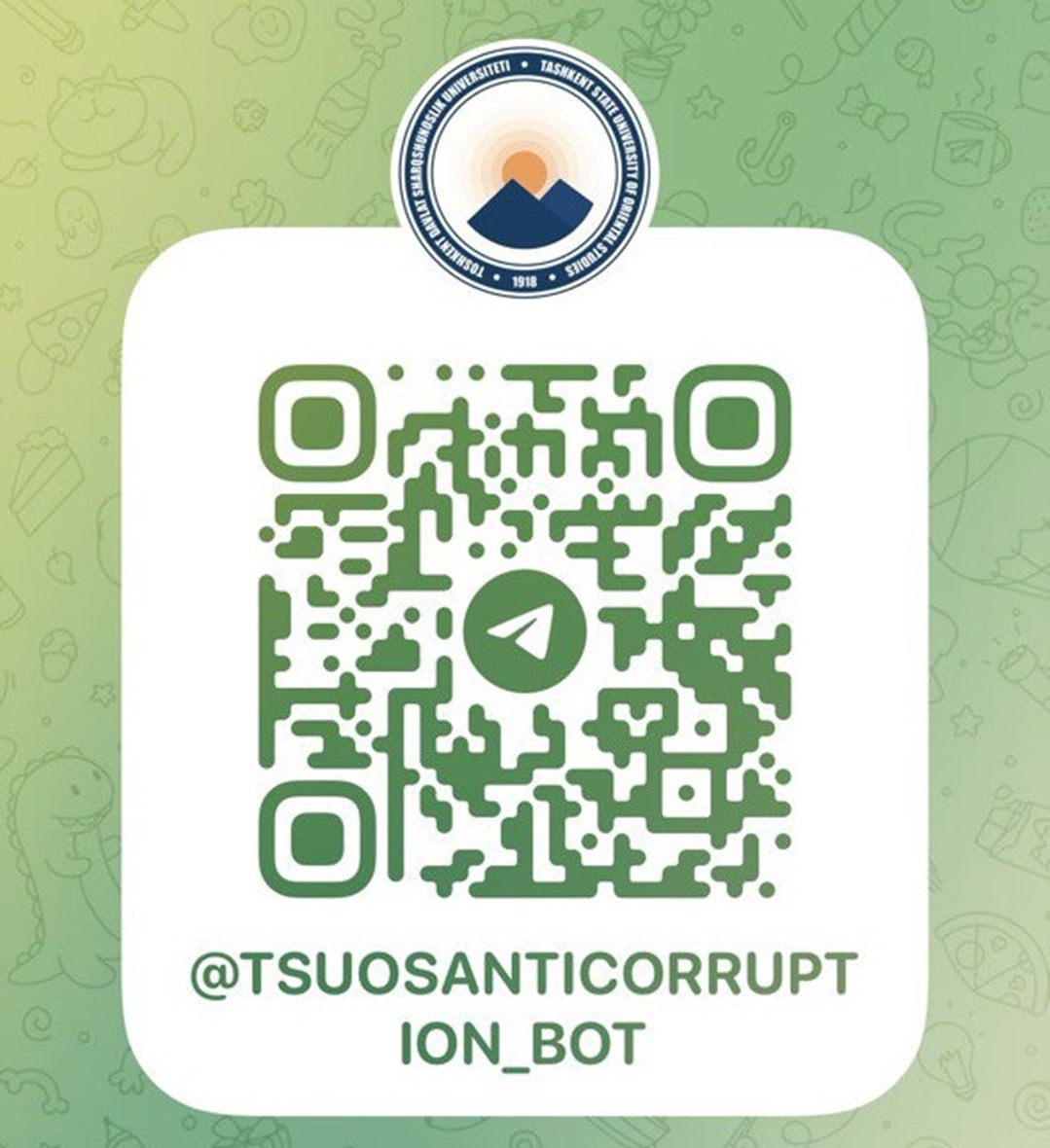
TSUOS provides secure and accessible channels for reporting suspected cases of corruption, bribery, or unethical behaviour. Stakeholders, including students, staff, and external partners, can report concerns anonymously or openly through:
- Telegram Bot: @tsuosanticorruption_bot — a secure platform for submitting reports directly to the Compliance Control Department.
- Google Form: Reporting Form — an online form designed for safe and confidential reporting.
All submissions are treated confidentially, and TSUOS ensures that no retaliatory actions are taken against whistleblowers. These channels are part of the university’s commitment to transparency, accountability, and a corruption-free environment.
Social networks:
