








A Scientific Seminar on Early Islamic Historiography Held at TSUOS
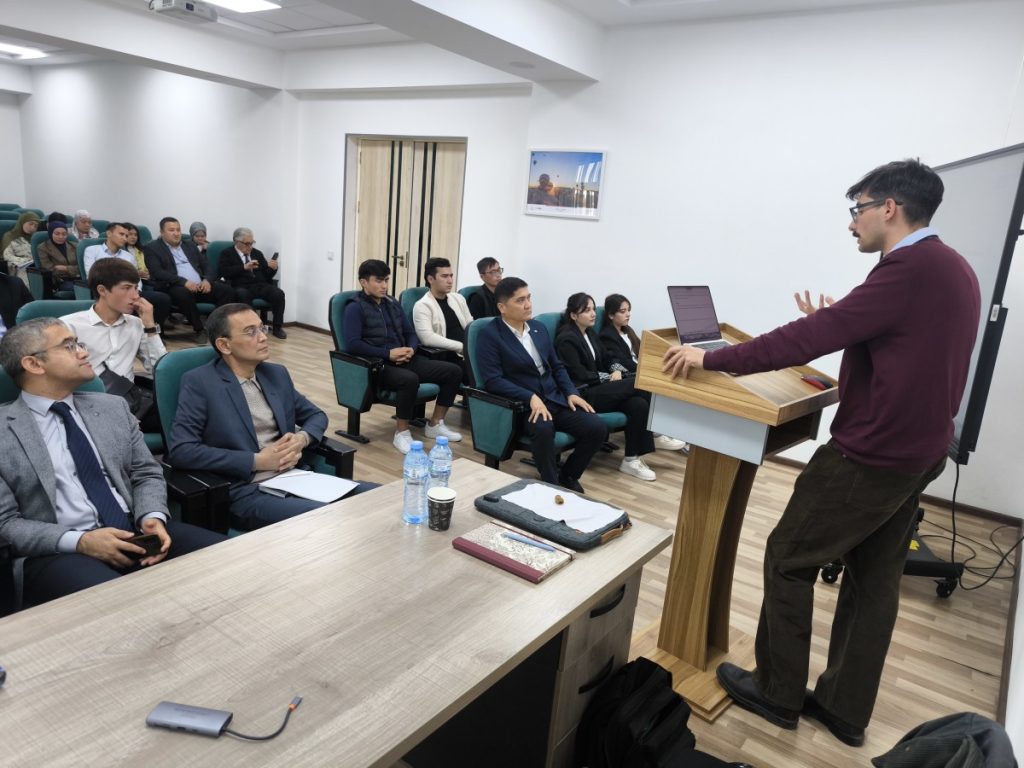
On October 31, 2025, at the Faculty of Eastern Civilization and Philosophy of Tashkent State University of Oriental Studies, a scientific seminar was organized by the Department of Central Asian History as part of the Erasmus+ ICM (International Credit Mobility) program. The event featured researcher and source studies scholar Matteo Cecchetti from the University of Pisa, Italy. The seminar was attended by the dean of the faculty, professors, doctoral candidates, researchers, master’s students, and undergraduates.
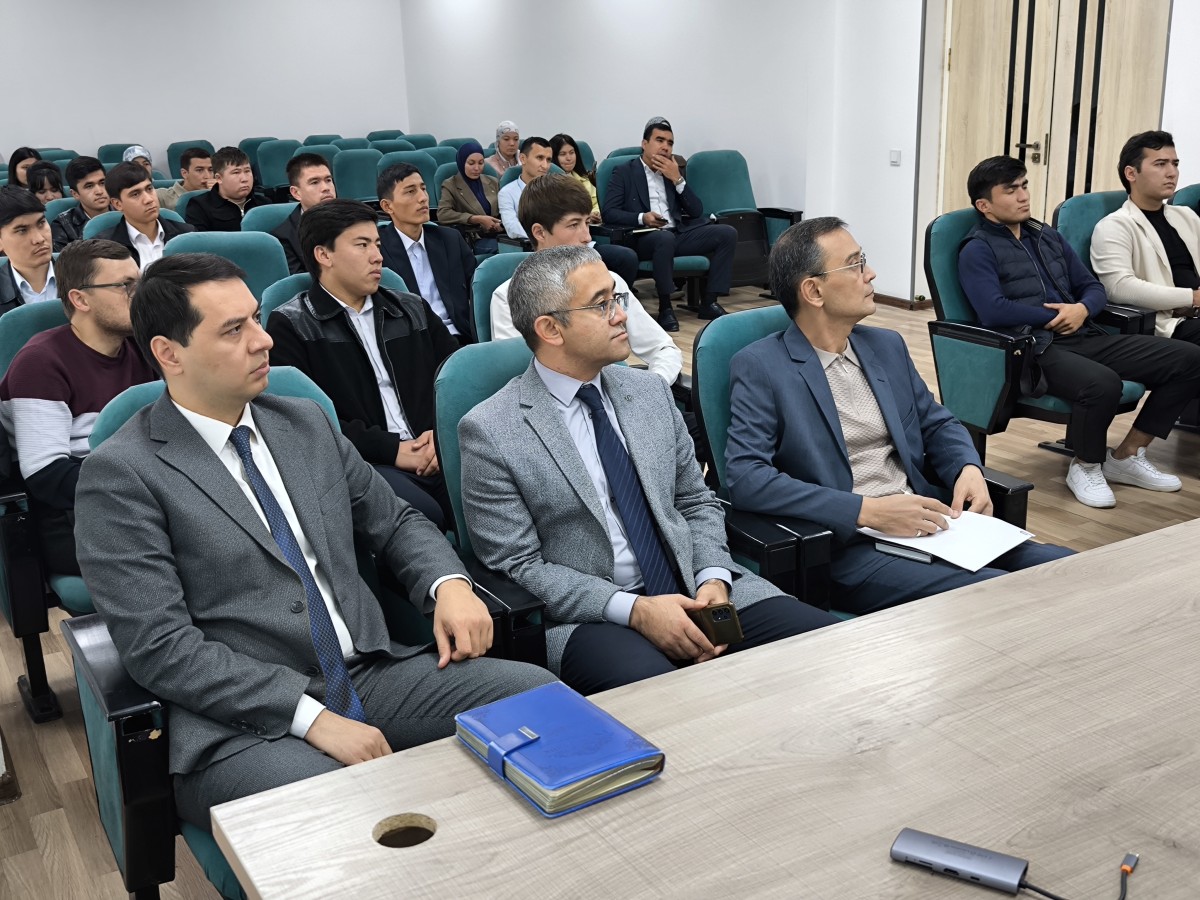
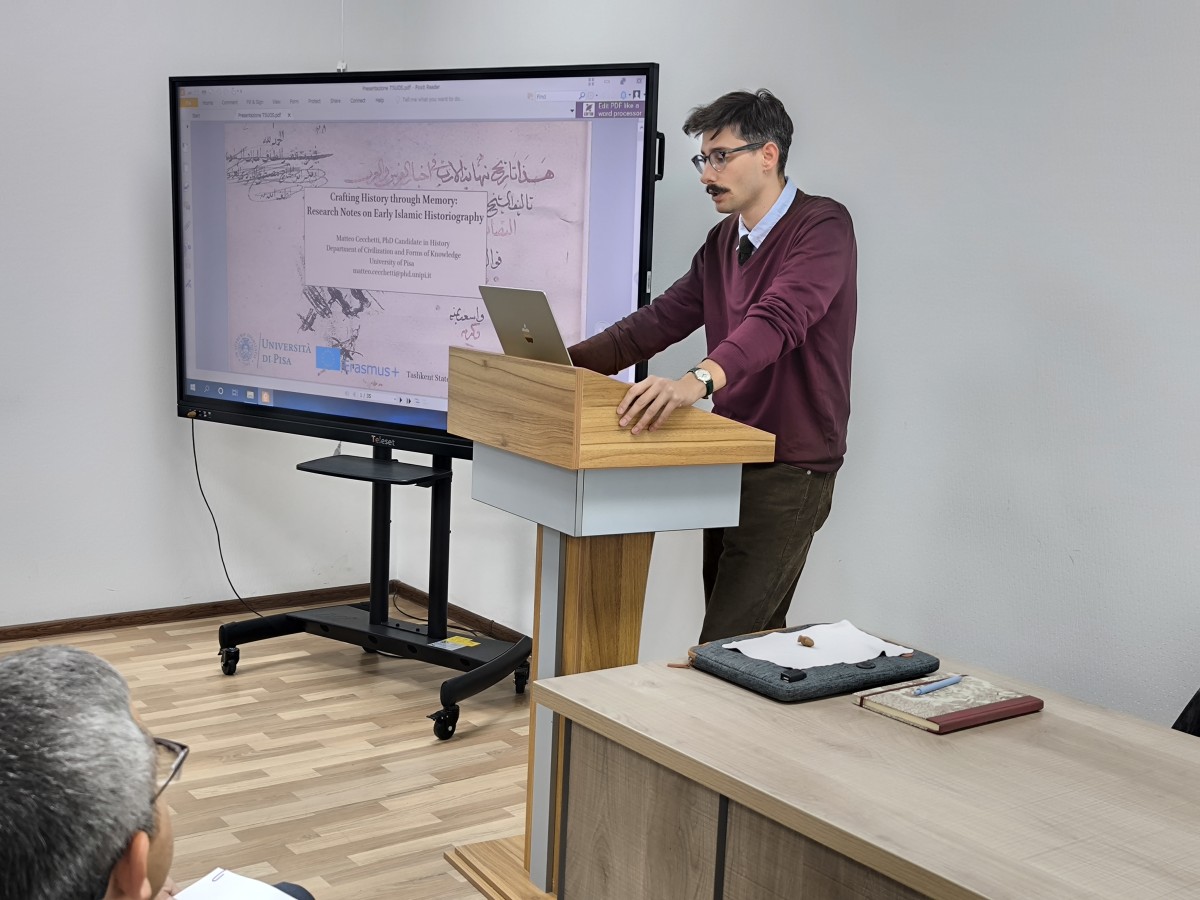
During the seminar, Matteo Cecchetti delivered a lecture titled “Building History Through Memory: Reflections on Early Islamic Historiography.” In his presentation, he discussed how early Islamic historiography was formed and explored the theoretical foundations of interpreting past events as sources of collective memory.
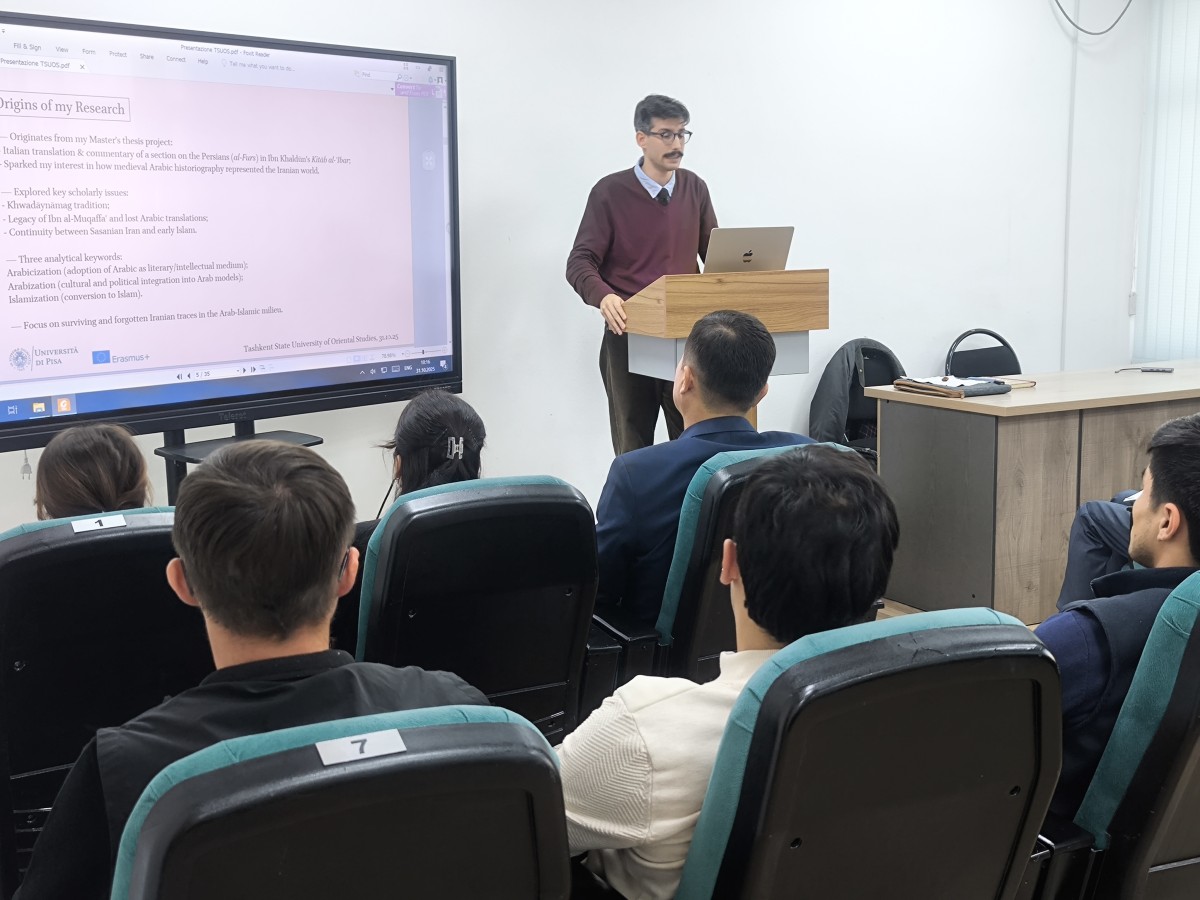
The research focuses on a rare source from the 8th–9th centuries titled “Nihayat al-Irab fi akhbar al-Furs wa-l-Arab.” This work harmoniously integrates Arab and Persian historical memory, linking Iran’s pre-Islamic political legacy with the tribal history of the Arabs, thereby reflecting the cultural and ideological transformations that occurred during the transition to the Islamic period.
Using a mnemonic-historical approach, the speaker analyzed the narrative of Ardashir and the Yemeni ruler As’ad ibn Amr presented in the text.
Through this story, he demonstrated how Arab and Persian historical perceptions were reinterpreted within the Islamic ideological framework, with the legacy of the past being recontextualized in a new spiritual dimension. The lecture highlighted that early Islamic historical texts did not reject previous political and spiritual traditions but instead integrated them harmoniously into the broader Islamic cultural memory. This process reveals the role of historical narrative not only as a means of conveying information but also as a tool for shaping identity and historical consciousness.
At the end of the seminar, participants engaged in a Q&A session and exchanged scholarly views on the topic. Researchers noted that this approach could open new prospects in the fields of source studies, historical hermeneutics, and cultural memory research.
The event marked another important step in expanding academic cooperation, promoting international scholarly exchange, and applying modern methodological approaches to the study of Eastern historical heritage.
Social networks:
