








Intercultural Communication Project at the Japanese Language Institute of the Japan International Foundation
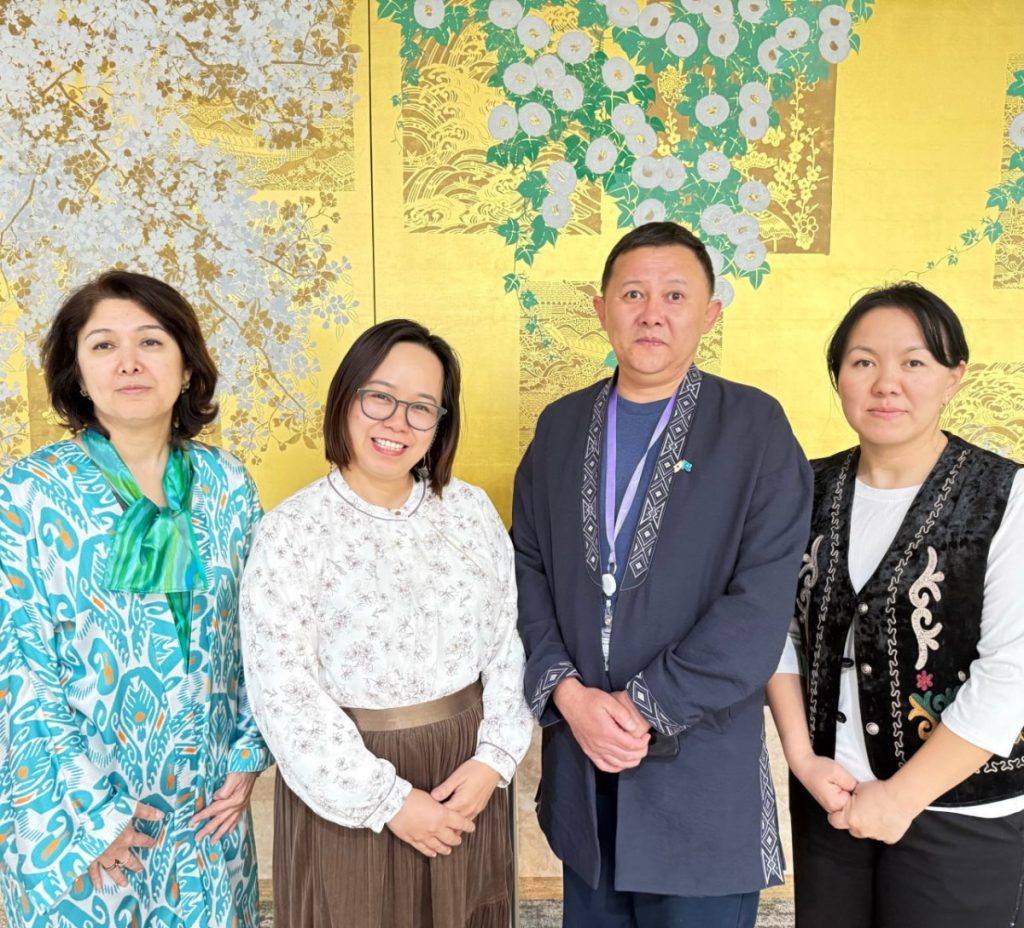
To enhance the quality of education and in line with the UN Sustainable Development Goals (SDGs), particularly SDG 4 — “Quality Education”, SDG 12 — “Responsible Consumption and Production”, and SDG 13 — “Climate Action”, the “Intercultural Communication” project was implemented. The project was organized as part of the 2025 Winter Pedagogical Training Program and aimed to develop intercultural competencies through the example of Japanese culture.
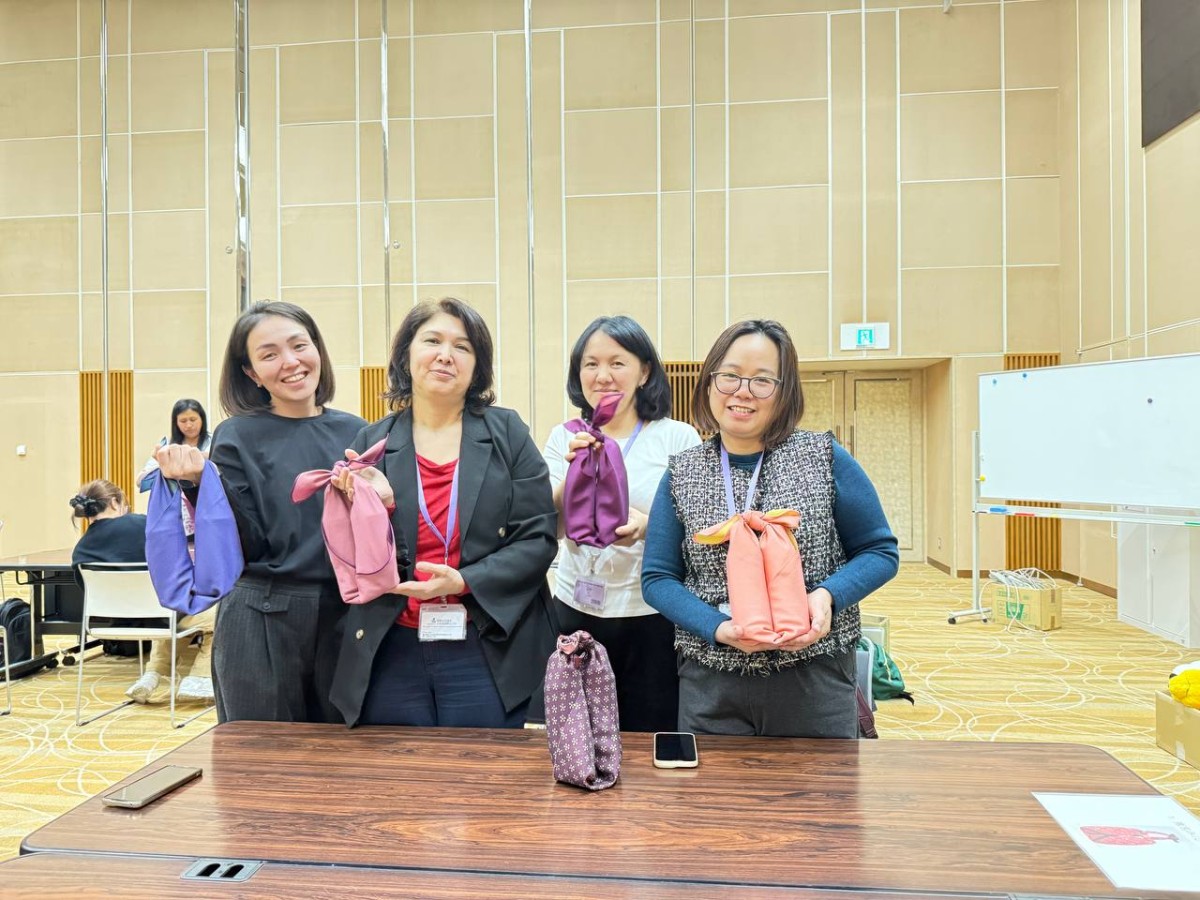
During the sessions, the concepts of “wrapping” and “tying” in traditional Japanese culture were analyzed in terms of their historical, social, and spiritual meanings through an intercultural lens. Participants identified similarities and differences between their national culture and Japanese culture, developing analytical thinking skills. Discussions also covered ecological awareness, reuse, and waste reduction, highlighting their global importance.
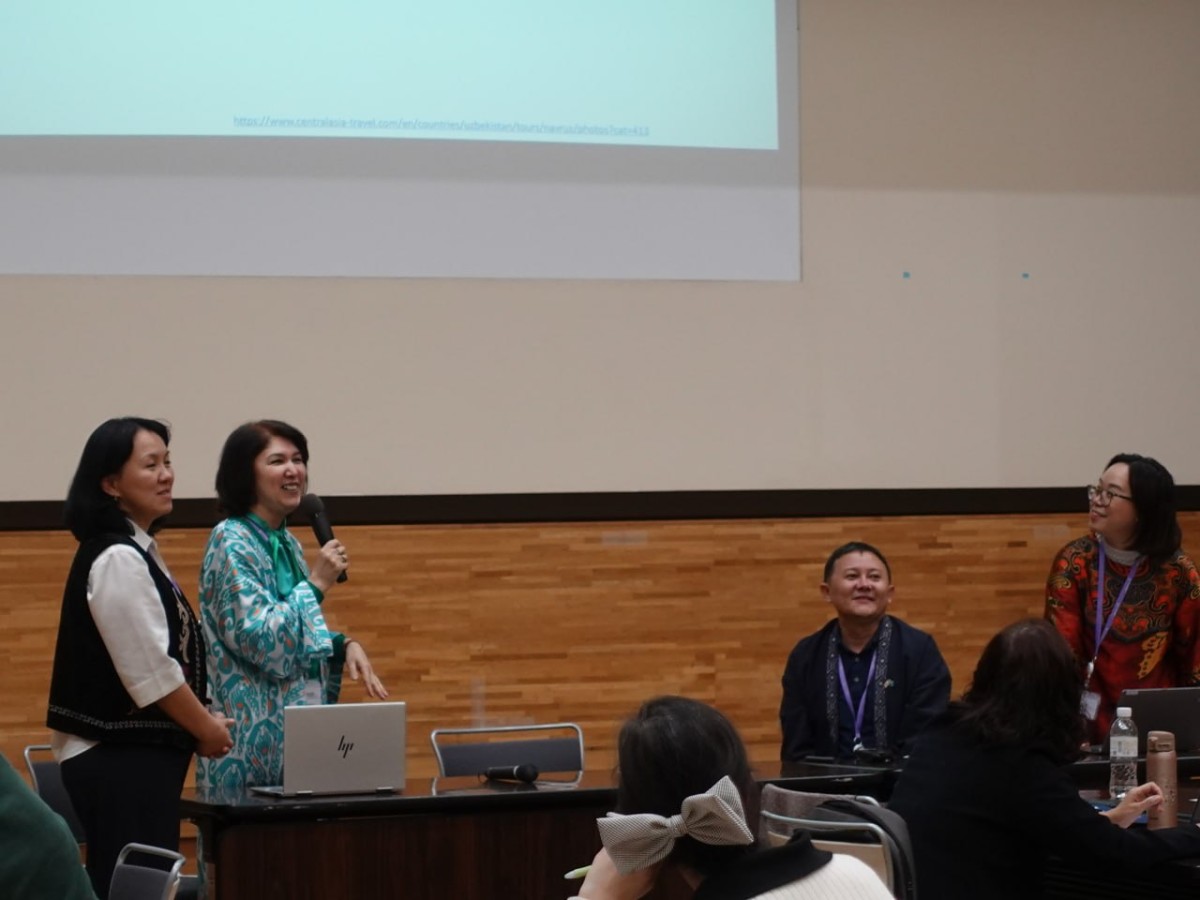
A collaborative team of four professors participated in the project: Xalmurzaeva Nodira (Uzbekistan), Akharov Yerlan (Kazakhstan), Nusuvalieva Jyldiz (Kyrgyzstan), and Trinh Thi Phuong Thao (Vietnam), who jointly developed a practical project in the field of “Japanese Culture”. The project demonstrated the interconnectedness of traditional values and contemporary global issues. During the practical stage, furoshiki techniques were tested, reinforcing teamwork and creativity competencies.
As a result, participants gained practical experience in developing intercultural communication competencies, integrating sustainable development principles into the educational process, and fostering global thinking skills.
Social networks:
