






17.2.4. COLLABORATION FOR SDG BEST PRACTICE
17.2.4. COLLABORATION FOR SDG BEST PRACTICE
Tashkent State University of Oriental Studies (TSUOS) is committed to advancing international best practices in the achievement of the United Nations Sustainable Development Goals (SDGs) through collaborative research, policy dialogue, and capacity-building initiatives with global partners.
Through extensive partnerships and participation in international programs, TSUOS systematically studies, compares, and adapts successful global approaches to higher education governance, inclusivity, and institutional innovation, integrating them into its strategic and operational framework.
International Cooperation and Research-Based Collaboration
As of 2024, TSUOS has established 169 international agreements (MoUs and cooperation documents) with universities, research institutes, and public organizations from 26 countries.
Each partnership includes a clause on academic cooperation, joint research, and the sharing of best practices in education, gender equality, social inclusion, and sustainable innovation.
Through these collaborations, TSUOS and its partners jointly:
- Conduct comparative studies on sustainability-oriented education, gender equity, youth employment, and institutional governance;
- Develop joint recommendations and model practices for the implementation of SDGs in higher education institutions;
- Organize international forums, symposiums, and workshops to share successful initiatives and challenges in the SDG process;
- Facilitate the exchange of academic materials, methodologies, and data related to sustainability policy and measurement.
- ERASMUS+ INTERNATIONAL CREDIT MOBILITY (ICM)
Within the framework of the Erasmus+ International Credit Mobility (ICM) programme, TSUOS collaborates with universities across Europe and Asia to enhance academic exchange, promote sustainable education models, and share effective institutional practices in governance and inclusivity.
These collaborations serve as a platform for:
- Exchanging teaching methodologies and sustainability-focused curricula;
- Conducting joint research on social, cultural, and environmental challenges relevant to the SDGs;
- Hosting academic workshops and international weeks dedicated to innovation, quality assurance, and sustainable development.
This program helps TSUOS align its academic practices with European standards and apply evidence-based approaches to inclusive and sustainable education (SDGs 4, 5, 10, and 17).
- UZBEKISTAN GOVERNANCE CHANGE ACADEMY NETWORK (G-CAN)
TSUOS is an active participant in the Uzbekistan Governance Change Academy Network (G-CAN) — part of the British Council’s “Going Global Partnerships” Programme, implemented in cooperation with the Ministry of Higher Education, Science and Innovation of the Republic of Uzbekistan.
G-CAN is designed to strengthen university governance systems through experiential learning, international benchmarking, and peer-to-peer exchange.
It supports institutional autonomy, leadership, and accountability — all essential to sustainable institutional transformation.
Through participation, TSUOS:
- Enhances its governance frameworks in line with international standards;
- Learns and tests comparative governance models from other higher education systems;
- Engages in systemic and cultural reform, aimed at operational efficiency and transparency;
- Develops a community of practice for sharing best governance practices among Uzbek universities.
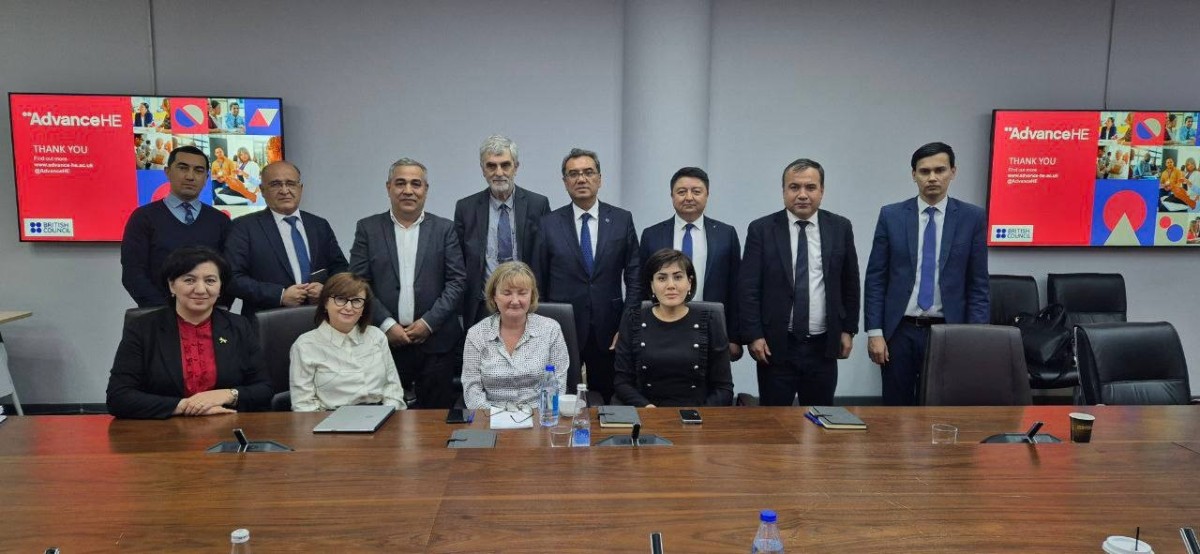
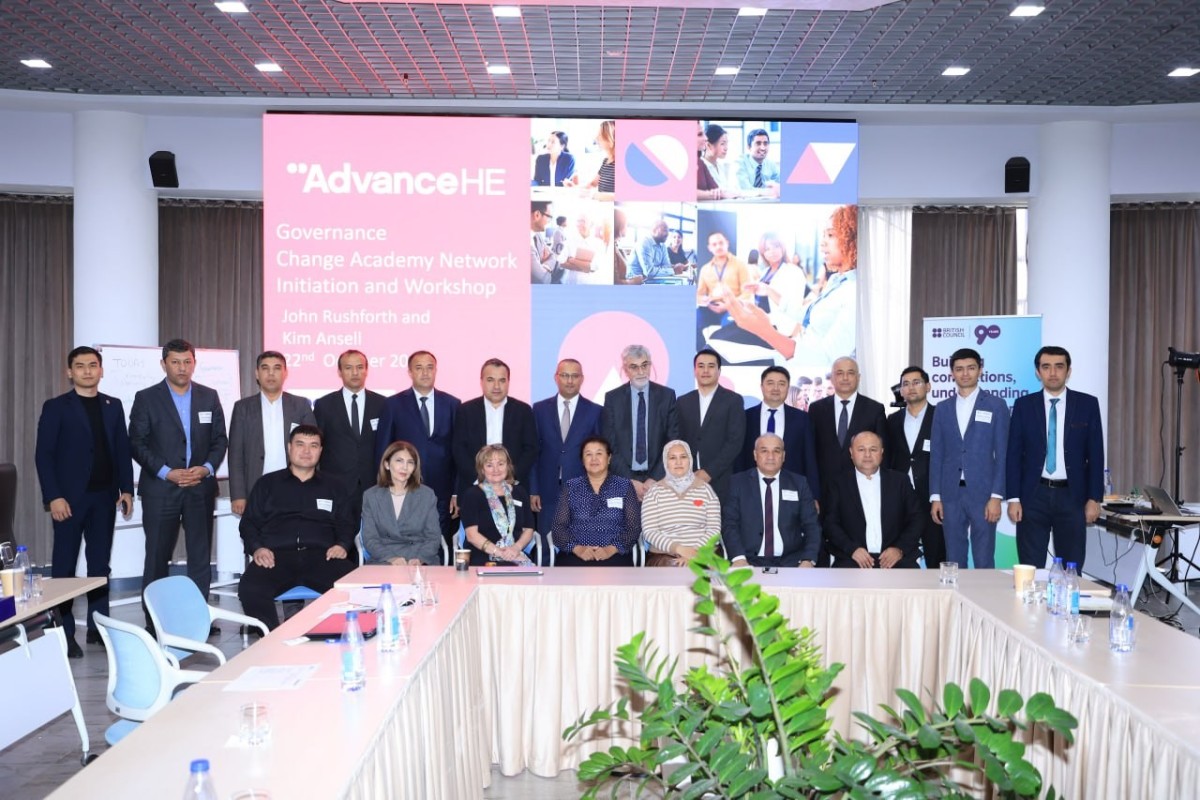
On October 22–23, 2024, a seminar-training was held for a working group consisting of representatives from 14 higher education institutions as part of the implementation of the “National Code of University Governance,” with the participation of experts from the British Council and the UK-based organization “Advance HE”.
These activities directly support SDG 16 (Peace, Justice, and Strong Institutions) and SDG 17 (Partnerships for the Goals) by promoting good governance, integrity, and institutional sustainability.
Since 2022, TSUOS has participated in the Inclusive Education in Higher Education in Uzbekistan: A Good Practice Guide initiative, launched by the British Council in Uzbekistan in collaboration with major national and international higher education institutions.
The program identifies and documents inclusive education best practices through comparative analysis of approaches used in Uzbekistan and the United Kingdom.
TSUOS contributes expertise to the development of inclusive curricula, student support mechanisms, and stakeholder engagement frameworks.
The initiative prioritises:
- Empowerment of women and girls (SDG 5);
- Increased access for students with disabilities (SDG 10);
- Equal educational opportunities for low-income groups (SDG 4).
By participating in this initiative, TSUOS helps shape national and regional policy frameworks for inclusive higher education, ensuring that institutional development aligns with international standards.
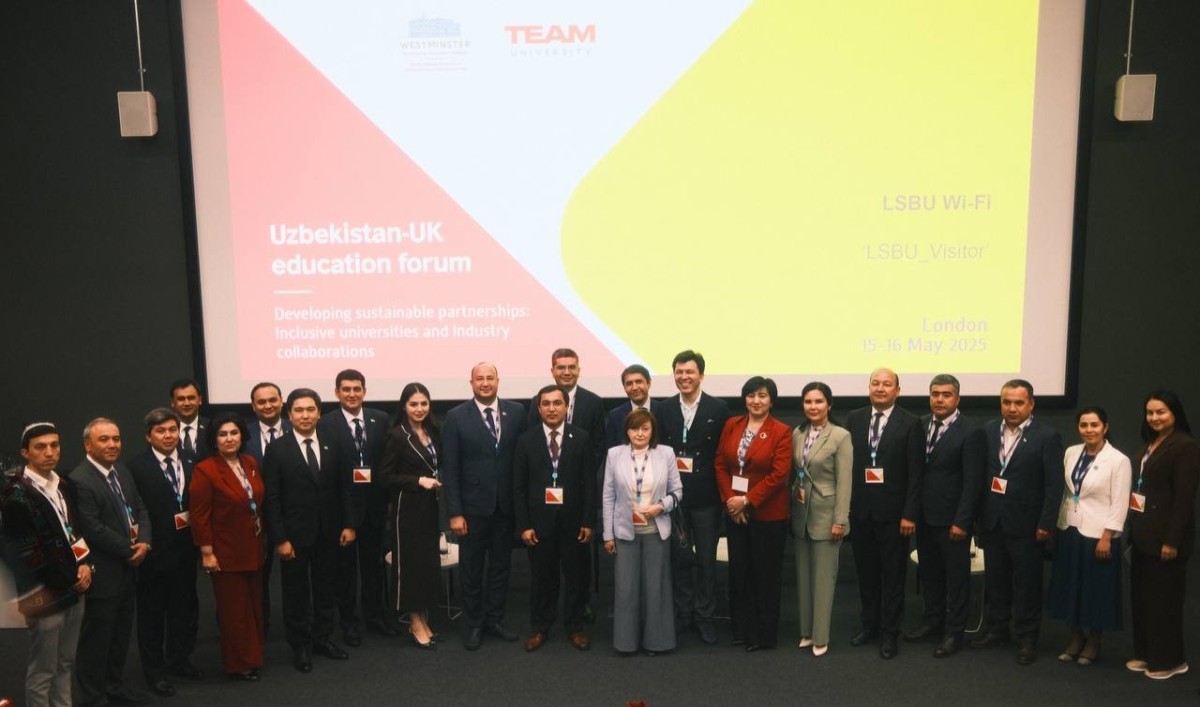
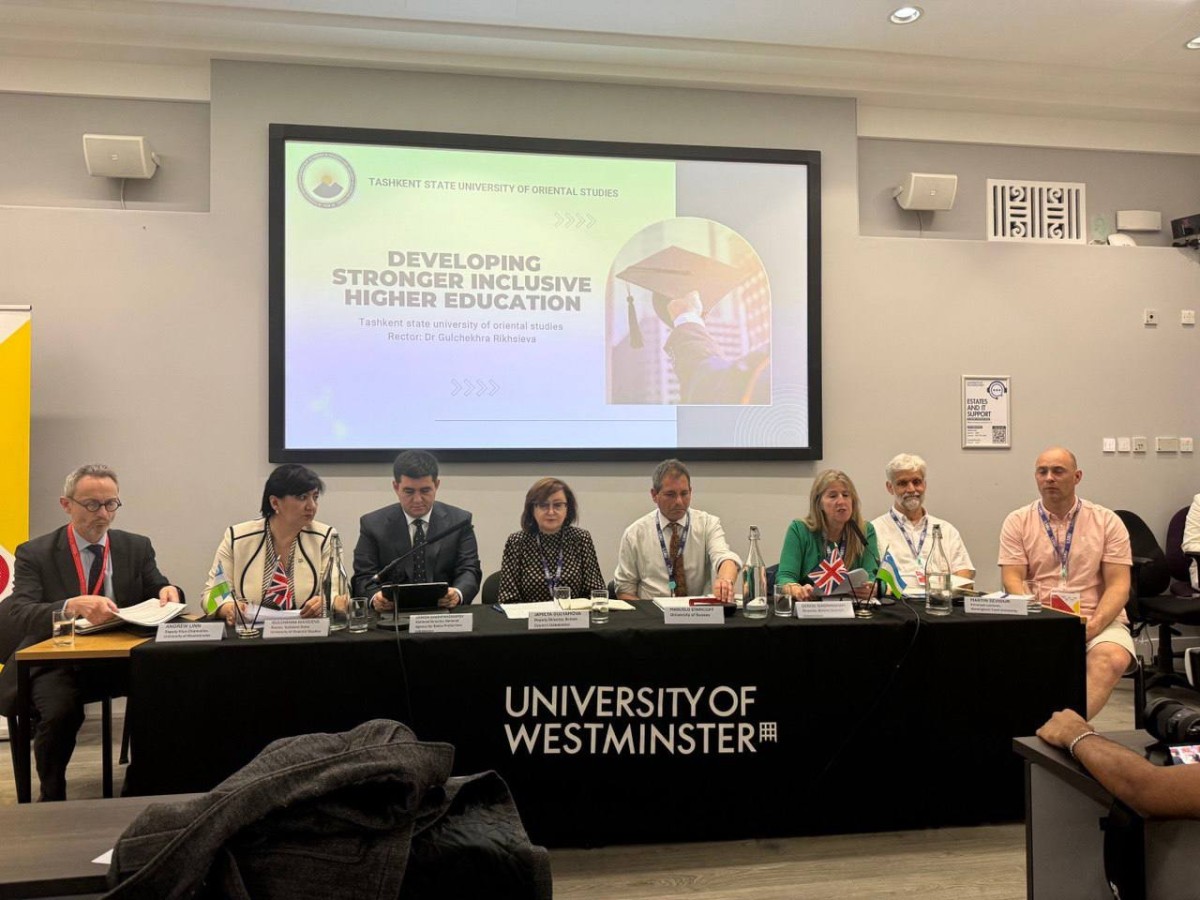
During the meeting on January 15, 2024, between TSUOS Rector Prof. Gulchehra Rikhsieva and Westminster University’s Vice Rector for Global Engagement and Employability, Alexandra Hughes, both sides discussed the development of inclusive education, directly contributing to SDG 4 (Quality Education) and SDG 10 (Reduced Inequalities).
Through comparative dialogue, the British side shared their strategic approach to inclusivity in education, while TSUOS emphasized the need to adapt these strategies to Uzbekistan’s cultural and educational context. This collaboration aims to develop a “Student Support Unit”, create inclusive curricula and evaluation criteria, and organize training programs for staff in cooperation with international organizations such as “Sharoit+”.
In addition, TSUOS’s Department of Research and Innovation proposed a joint project titled “Inclusive Education in Language Learning”, developed together with Tashkent State University of World Languages, which includes mobile applications and multimedia resources. Such initiatives allow TSUOS to study global approaches, adapt them locally, and establish international best practices in inclusive and equitable education.
Through these and other collaborations, TSUOS not only shares its experience but also contributes to developing comparative frameworks for inclusive and sustainable education in higher learning, reinforcing its commitment to achieving the UN SDGs through research, innovation, and global partnerships.
- Partnership with “Arabic for All” and King Salman Global Academy for Arabic Language (Saudi Arabia)
TSUOS actively collaborates with the “Arabic for All” organization and the King Salman Global Academy for Arabic Language (KSAA) to enhance the quality of language education and professional development of Arabic language teachers.
This cooperation, initiated after the official visit of the President of Uzbekistan to Saudi Arabia in August 2022, is designed to exchange experience and develop best practices in Arabic language pedagogy.
Within the framework of this partnership:
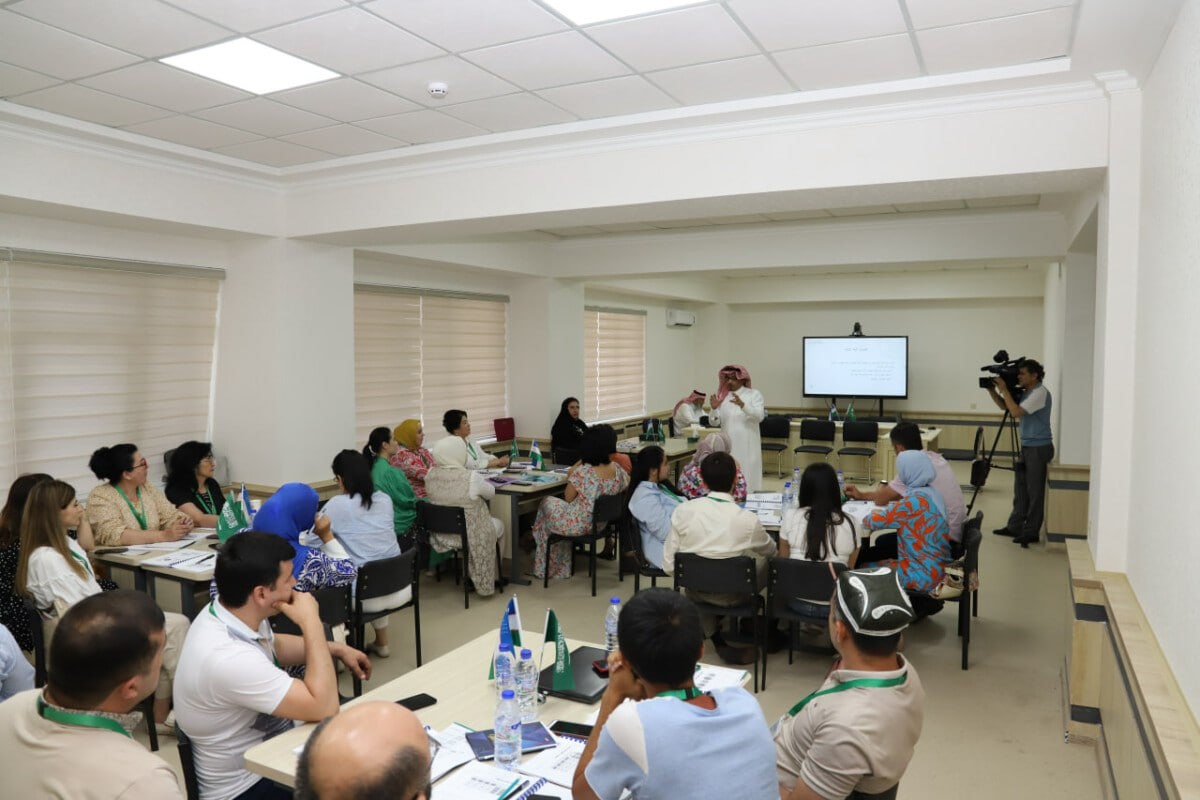
- Advanced training courses for Arabic language teachers were launched at TSUOS in cooperation with KSAA in June 2023;
- In July 2024, eight TSUOS teachers completed specialized training at “Arabic for All” centers in Saudi Arabia;
- These programs introduce modern pedagogical technologies and innovative teaching methods to the Uzbek higher education system;
- The collaboration supports continuous professional development and raises the quality of Arabic language teaching nationwide.
Through this initiative, TSUOS contributes to advancing SDG 4 (Quality Education) by fostering innovation, knowledge exchange, and capacity building in higher education.
Global Policy Alignment and Best Practice Exchange
Overall, TSUOS’s engagement in these international collaborations contributes to:
- The identification and adoption of effective SDG implementation models;
- The development of evidence-based governance and inclusion policies;
- The strengthening of inter-university networks that support sustainable transformation in higher education.
By combining international learning with national application, TSUOS continues to promote a culture of excellence, inclusivity, and accountability that contributes directly to the global SDG agenda.
Commitment to Continuous Learning and Global Standards
TSUOS continuously reviews global standards and comparative approaches in the field of sustainability to integrate internationally recognized best practices into its academic, social, and operational framework.
By fostering dialogue between academia, government, NGOs, and the private sector, the university ensures that its contributions are both globally informed and locally relevant.
Impact
These international collaborations have positioned TSUOS as one of Uzbekistan’s leading universities in promoting evidence-based, globally aligned, and locally adaptive SDG strategies.
By sharing experiences, methodologies, and outcomes across borders, TSUOS contributes to building a community of practice that supports the collective achievement of the SDGs in Central Asia and the wider world.
Social networks:
