








DEPARTMENT OF WESTERN LANGUAGES
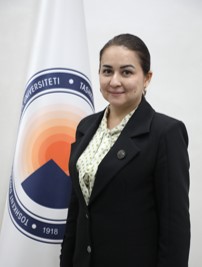 |
Saodat Saidakbarova | |
| Scientific degree and title: | PhD, Associate Professor | |
| Position: | Head of the department | |
| Reception hour: | Daily (08:00-16:00) | |
| Tel.: | +99871 233-34-24 | |
| E-mail: | saodat_saidakbarova@tsuos.uz | |
At the Intersection of Language, Education, Research and International Cooperation
The Western Languages Department of Tashkent State University of Oriental Studies is an academic and research unit committed to foreign language education, the advancement of contemporary linguistics and translation studies, the expansion of international academic cooperation, and the preparation of highly qualified and competitive specialists.
The Department’s principal aim is to teach foreign languages not merely as a means of communication, but as a tool for international education, research, diplomacy, translation, intercultural communication and professional activity.
Today, the Department places particular emphasis on the integration of teaching and research, the application of modern pedagogical technologies, adherence to international standards, and the development of students’ independent and critical thinking skills.
About the Department
The history of the Department is closely connected with the long-standing tradition of foreign language teaching at the University. In 1977, the Department of English was established. From 1991, it continued its activities as the Department of Western European Languages. In 2020, it began operating under its current name, the Western Languages Department. In 2024, following the University’s optimisation and transformation processes, the Department became part of the Faculty of Applied Sciences.
Since 2024, the Department has been headed by Saidakbarova Saodat Parxadjanovna, PhD, Associate Professor.
The teaching staff of the higer school
- Saodat Saidakbarova – Head of Department.
- Karima Raxmonberdiyeva – Associate Professor.
- Maxliyo Аbdullayeva – Associate Professor.
- Iroda Jalolova – Assistant Professor.
- Madinaxon Munavvarxona – Assistant Professor.
- Shakhnoza Asqarova – Associate Professor.
- Shokhsanam Bekmuratova – Assistant Professor.
- Anvar Musayev – Assistant Professor.
- Lobar Artikova – Assistant Professor.
- Barno Tadjibayeva – Assistant Professor.
- Dildora Yunusova – Assistant Professor.
- Nargiza Fuzaylova – Assistant Professor.
- Nozima Odilova – Assistant Professor.
- Maxliyo Xabibullayeva – Assistant Professor.
- Muxlisa Nasretdinova – Assistant Professor.
- Dilfuza Аkramxodjayeva – Assistant Professor.
- Umida Makhmudova – Assistant Professor.
- Dildora Komilova – Assistant Professor.
- Munisa Bakhrombekova – Assistant Professor.
- Dilshoda Maksudova – Assistant Professor.
- Zulfiya Mirabdullayeva – Assistant Professor.
- Dildora Bakhadirova – Assistant Professor.
- Shirin Xamrabayeva – Assistant Professor.
- Go‘zal Sobirova – Assistant Professor.
- Hayotxon Shernazarova – Assistant Professor.
- Gulshan Quryozova – Assistant Professor.
- Zilola Abidova – Associate Professor.
- Dilbar Maratova – Assistant Professor.
- Khurshida Tosheva – Assistant Professor.
- Madina Khamroeva – Assistant Professor.
- Shakhnoza Tuychibaeva – Associate Professor.
- Setora Shaxobova – Assistant Professor.
- Shaxnoza Yakubova – Assistant Professor.
- Liliya Belix – Assistant Professor.
- Dilfuza Shakirova – Assistant Professor.
- Zilola Inagamova – Assistant Professor.
- Madamin Razzakov – Assistant Professor.
- Dilafruz Fayzullaeva – Head of the cabinet.
OUR MISSION
The mission of the Western Languages Department is to integrate language education, contemporary research and international academic cooperation in order to prepare globally minded specialists who can use foreign languages fluently and effectively in their professional activities, conduct research, and communicate successfully across cultures.
- provide high-quality, modern foreign language education;
- enrich the learning process through advanced pedagogical technologies and international experience;
- develop students’ independent thinking, research skills and academic writing;
- continuously strengthen the research capacity of academic staff;
- participate in national and international research projects;
- develop academic links with foreign universities and research centres;
- ensure the integration of education, research and professional practice.
EDUCATION
Bachelor’s and Master’s Programmes
A new stage in the development of the Department began in the 2024-2025 academic year. The Department currently provides specialist training in:
60110900 – Foreign Language and Literature (English), Bachelor’s degree programme;
70110901 – Foreign Language and Literature (English), Master’s degree programme.
These programmes are designed to provide students not only with a high level of English proficiency, but also with strong theoretical and practical knowledge in linguistics, literary studies, translation studies, foreign language teaching methodology, and academic and scholarly communication.
The Western Languages Department also provides foreign language instruction for professional and academic purposes across all study programmes of the University. In addition to the Bachelor’s and Master’s programmes in Foreign Language and Literature, English is taught as a second foreign language to students of other academic programmes in accordance with the principles of English for Specific Purposes (ESP). Depending on their choice and the relevant curriculum, students may also study French or Spanish as a second foreign language. In addition, Russian is taught as a third language across all study programmes of the University, contributing to the development of students’ multilingual, academic and professional communication competencies.
Modern Language Education
Teaching at the Department is organised around contemporary student-centred approaches that encourage active participation in the learning process.
- communicative language teaching;
- integrated development of language skills;
- project-based learning;
- problem-based learning;
- independent and collaborative learning;
- academic writing;
- presentation and public speaking skills;
- use of digital and multimedia tools;
- application of language in professional and academic contexts.
For the Department, language learning is not limited to mastering grammar and vocabulary. An equally important objective is to develop students’ ability to support their ideas with evidence, analyse information, communicate with representatives of different cultures, and operate confidently in an international academic environment.
RESEARCH ACTIVITIES
Research is one of the strategic areas of the Western Languages Department. Academic staff conduct fundamental and applied research across a broad range of fields in modern philology.
- comparative and contrastive linguistics;
- translation studies and literary translation;
- linguocultural studies;
- pragmalinguistics and discourse analysis;
- gender linguistics;
- semantics and lexicography;
- foreign language teaching methodology;
- literary studies;
- intercultural communication;
- academic and professional communication;
- modern educational technologies.
The Department conducts research into the comparative analysis of English and Uzbek, the translation of nationally and culturally specific units, equivalence in literary translation, linguocultural features, speech genres, pragmatics, foreign language education and other current areas of scholarship.
Particular attention is given to incorporating research findings into teaching, involving young researchers in academic work, and increasing both the quantity and quality of publications in the international academic community.
INTERNATIONAL COOPERATION AND GLOBAL ACADEMIC ENGAGEMENT
International cooperation is one of the Department’s key strategic priorities. The Department develops partnerships with overseas universities, international educational organisations and research centres through joint educational projects, professional development programmes, international conferences, academic mobility, summer schools and research initiatives.
In recent years, the Department’s international activities have entered a new stage, with cooperation extending across the United Kingdom, Malaysia, Hungary, China, the Republic of Korea and other countries.
COOPERATION WITH THE UNIVERSITY OF WARWICK
One of the Department’s major international partners is the University of Warwick (United Kingdom). Within this cooperation, the ESP Hub – English for Specific Purposes Hub – was established at Tashkent State University of Oriental Studies.
The ESP Hub aims to develop modern English for Specific Purposes methodology, adapt English-language teaching to different professional and academic fields, strengthen the professional competencies of teaching staff, and integrate international experience into the University’s educational process.
- development of contemporary ESP methodologies;
- seminars and training programmes for academic staff;
- exchange of experience with international experts;
- improvement of professionally oriented English courses;
- development of new teaching and learning materials;
- implementation of joint academic and methodological projects.
This partnership provides an important platform for integrating international experience into English language education and for developing a modern model of ESP provision at the University.
COOPERATION WITH THE BRITISH COUNCIL
The British Council is one of the Department’s long-term international partners. Cooperation focuses on improving foreign language teaching methodology, supporting the professional development of teachers, organising international academic and methodological events, and disseminating modern pedagogical practice.
In 2026, the Western Languages Department organised an international scientific and practical conference in cooperation with the University of Warwick and the British Council. The conference provided an international academic platform for discussing current trends in foreign language teaching, innovative educational technologies, English for Specific Purposes, international educational practice and contemporary research.
The event created opportunities for international and local scholars, teachers, researchers and young specialists to exchange academic ideas and advanced professional practice.
COOPERATION WITH INTI INTERNATIONAL UNIVERSITY
The Department is also expanding its academic links in the Asian region. Educational and academic cooperation has been established with INTI International University, Malaysia.
As a practical outcome of this partnership, six members of the Western Languages Department participated in a professional development programme in Malaysia in April 2026.
ERASMUS+ AND COOPERATION WITH KÁROLI GÁSPÁR UNIVERSITY
To strengthen integration with the European Higher Education Area, the Department is developing international cooperation through the Erasmus+ programme.
Cooperation has been initiated with Károli Gáspár University in Hungary within the framework of Erasmus+, creating new opportunities for academic mobility, exchange of teaching and research experience, participation in international seminars and academic events, and the future development of joint educational and research projects.
NILE – NORWICH INSTITUTE FOR LANGUAGE EDUCATION
Cooperation with the Norwich Institute for Language Education (NILE), United Kingdom, is another important initiative aimed at developing the professional competence of the Department’s teaching staff in line with international standards.
Through this partnership, academic staff participate in international programmes focusing on foreign language teaching methodology, contemporary pedagogy, curriculum development and professional growth. The Department seeks to transfer this international experience into local teaching practice and to promote the wider application of modern educational methods.
INTERNATIONAL SUMMER SCHOOL
One of the Department’s important international educational projects is the annual summer school in Russian language and culture for international students. Experienced teachers of Russian from the Department take an active part in delivering the programme.
The Summer School aims to provide international students with opportunities to:
- study Russian intensively;
- develop spoken and written communication skills;
- build competence in academic and everyday communication;
- learn about the history and culture of Uzbekistan;
- gain international and intercultural communication experience.
Students from China and the Republic of Korea participated in the 2026 Summer School. Classes were delivered by the Department’s Russian language teachers and were combined with cultural and educational activities.
The project demonstrates the Department’s contribution not only to foreign language teaching, but also to promoting Uzbekistan as a venue for international education and intercultural dialogue.
GLOBAL OPPORTUNITIES FOR STUDENTS AND ACADEMIC STAFF
The Western Languages Department seeks to transform international cooperation from formal agreements into practical academic opportunities for students and members of staff.
- professional development of academic staff abroad;
- Erasmus+ academic mobility;
- international summer schools;
- attracting international students to TSUOS;
- international conferences and seminars;
- masterclasses and training sessions with international experts;
- international projects within the ESP Hub;
- joint research projects;
- international academic publications;
- student and staff exchange programmes.
Through these activities, the Department is developing international cooperation as a practical mechanism for strengthening educational quality, research capacity and global academic experience.
ACADEMIC STAFF
The academic community is one of the Western Languages Department’s greatest strengths. Today, the Department has approximately 36 members of academic staff, including experienced associate professors, scholars holding PhD and DSc degrees, senior lecturers, lecturers and early-career teachers.
The Department values the combination of experience and innovation. Alongside established academics, young researchers and teachers are supported in their academic and professional development and encouraged to adopt modern teaching approaches.
Members of staff are engaged not only in classroom teaching, but also in research, the preparation of textbooks and teaching materials, participation in national and international conferences, and the academic and professional mentoring of students.
Head of Department: Saidakbarova Saodat Parxadjanovna, Doctor of Philosophy (PhD) in Philology, Associate Professor.
STUDENT-CENTRED EDUCATION
The student is at the centre of the educational philosophy of the Western Languages Department. Students are viewed not as passive recipients of knowledge, but as active participants in their own learning.
Accordingly, particular attention is paid to developing students’ ability to:
- communicate fluently in a foreign language;
- think independently;
- draw evidence-based conclusions;
- write academic texts;
- deliver public presentations;
- work effectively with academic sources;
- conduct research;
- communicate successfully with representatives of different cultures;
- work both independently and collaboratively.
The Department’s goal is to provide graduates not only with a degree, but with the knowledge, language competence and intellectual independence required to establish themselves successfully in international academic and professional environments.
INTEGRATION OF EDUCATION AND RESEARCH
Teaching and research are not regarded as separate activities within the Department. The results of academic research are incorporated into the learning process, while emerging research areas provide a scholarly basis for students’ course papers, undergraduate final projects and Master’s research.
This approach enables students not only to acquire existing knowledge, but also to formulate new questions, critically analyse sources and reach independent academic conclusions.
THE WESTERN LANGUAGES DEPARTMENT – A LANGUAGE SPACE OPEN TO THE FUTURE
In today’s world, proficiency in a foreign language is no longer simply an additional skill. It is an essential component of international education, research cooperation, diplomacy, the global economy, intercultural communication and contemporary professional life.
From this perspective, the Western Languages Department of TSUOS sees its mission not only as teaching foreign languages, but also as building an academic bridge between East and West through knowledge, language and culture.
Its long-standing academic traditions, experienced teaching staff, new Bachelor’s and Master’s programmes, developing research schools and expanding international partnerships provide a strong foundation for the Department’s continued growth.
We teach languages.
We conduct research.
We connect cultures.
We prepare a new generation of globally minded specialists.
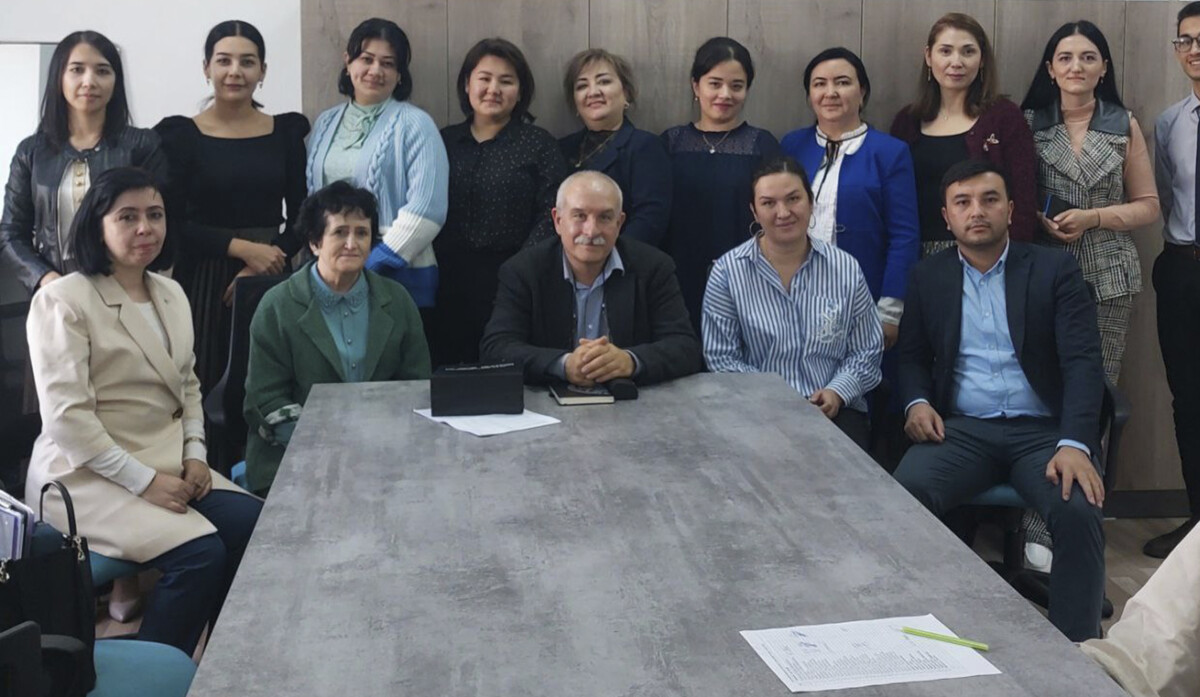
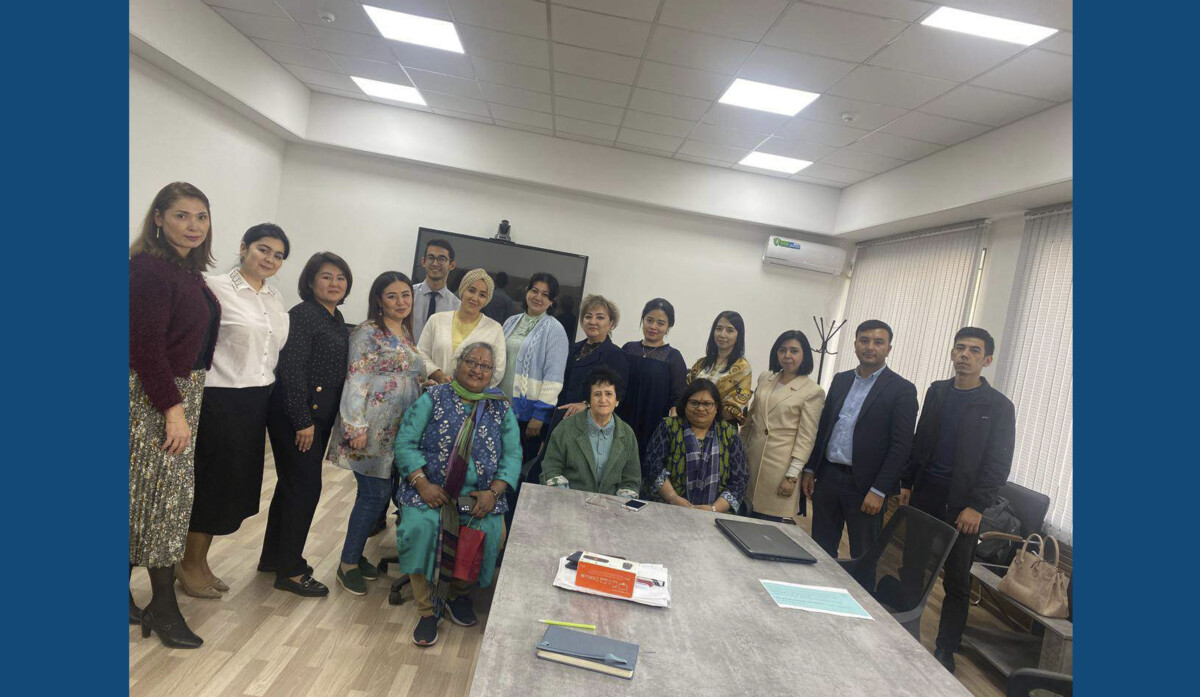
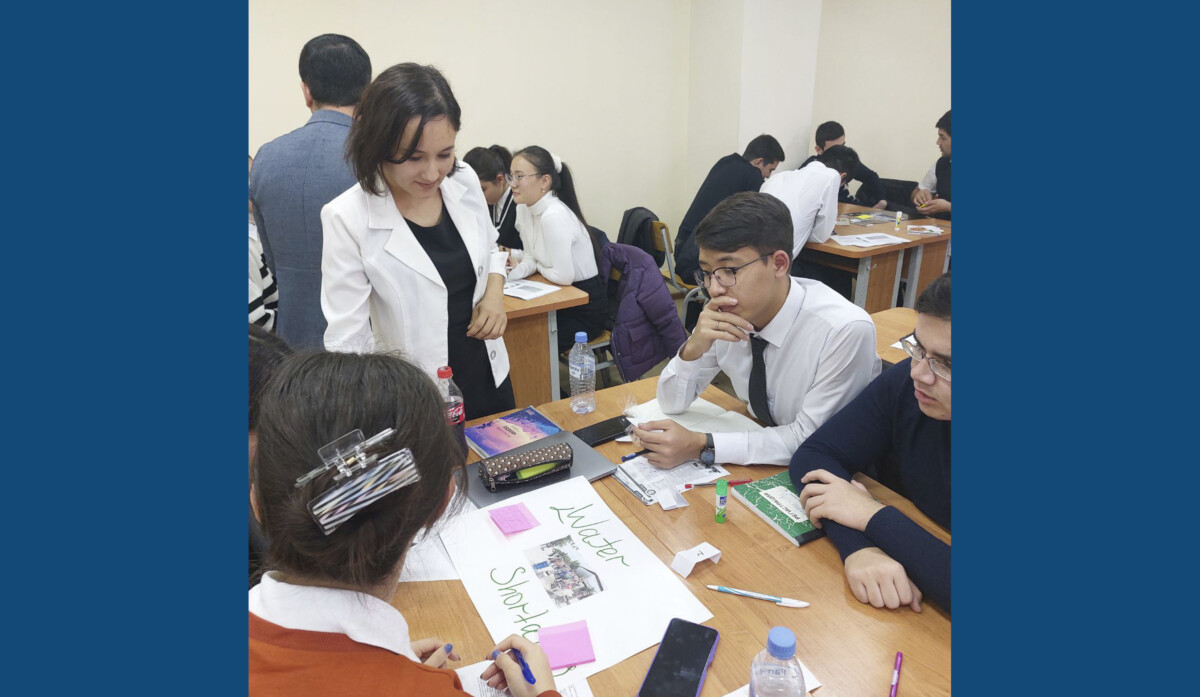
PHOTO REPORTS ON THE ACTIVITIES OF THE DEPARTMENT
Social networks:
