








Meeting Held to Strengthen Cooperation with Gyeongkuk National University
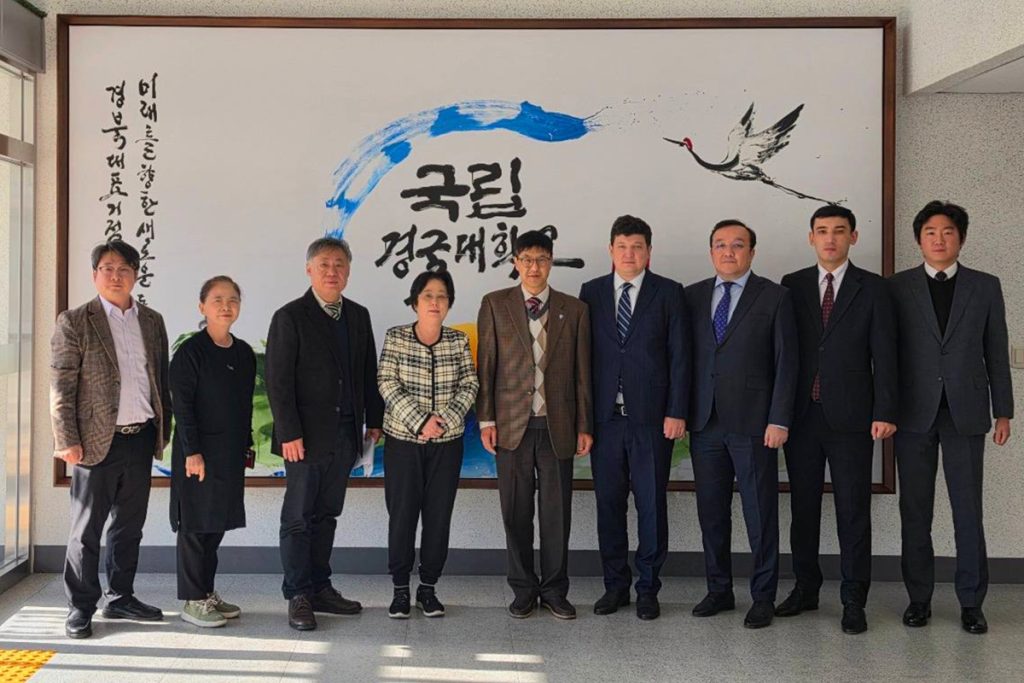
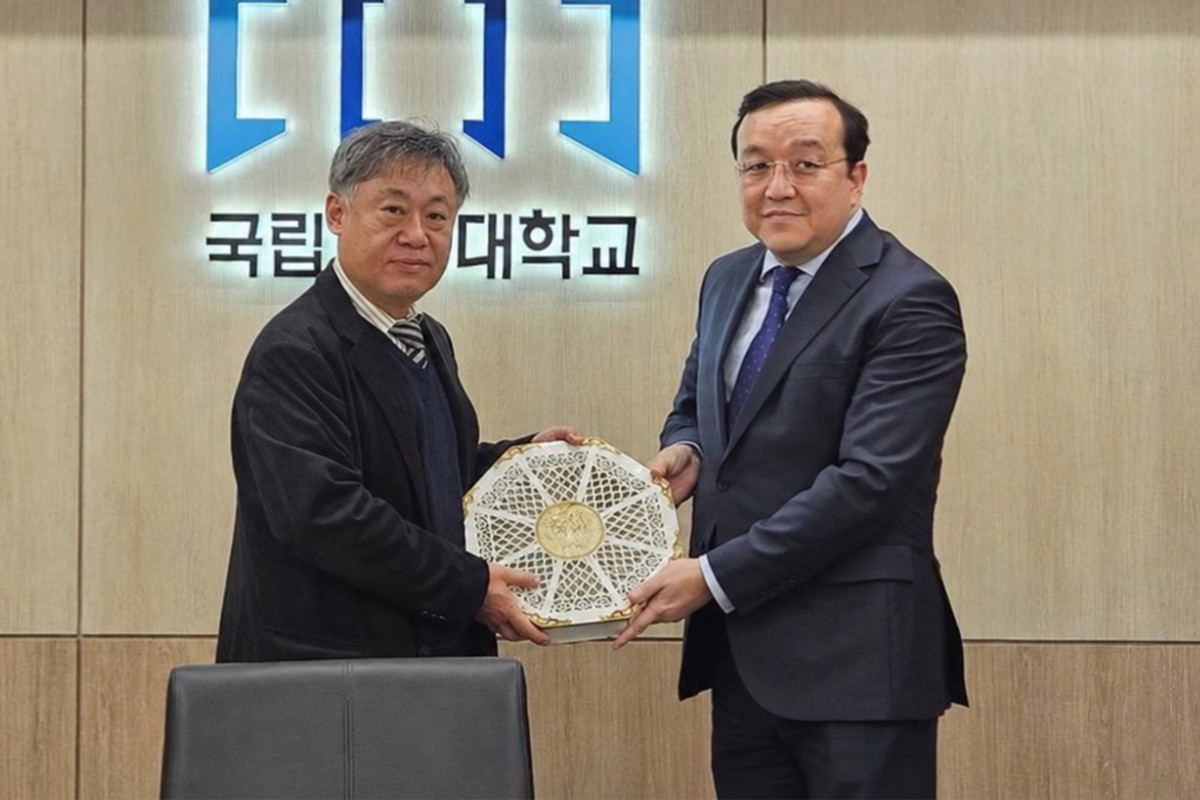
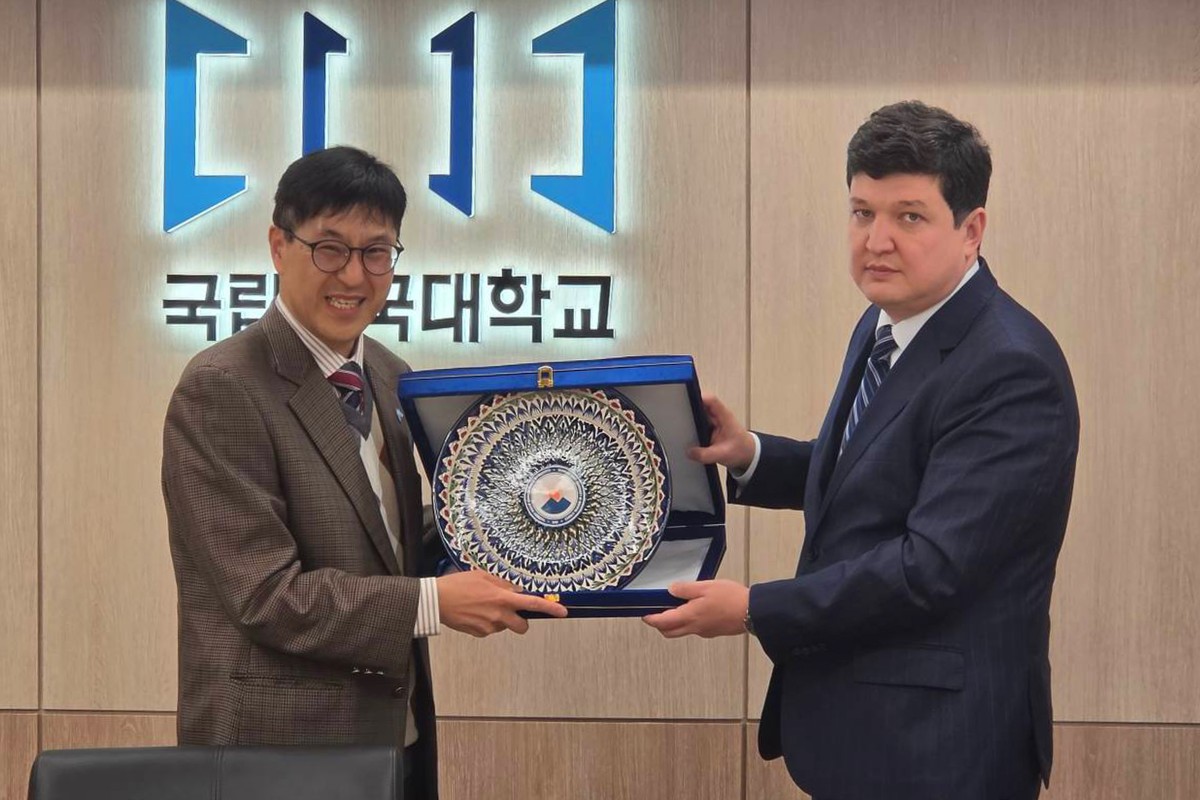
On 30 October 2026, a meeting was held in Andong, Republic of Korea, between the delegation of Tashkent State University of Oriental Studies (TSUOS) and the leadership of Gyeongkuk National University. The meeting focused on further strengthening bilateral cooperation and translating existing agreements into practical initiatives.
The meeting was attended by Lee Hyok Jae, Vice President of Gyeongkuk National University; Lim Chae Hwan, Director of the university’s Glocal Institute; and other responsible representatives. TSUOS was represented by D. Sayfullayev, Vice-Rector for Research and Innovation; A. Shukurov, Adviser to the Rector; Sh. Salimov, Head of the International Cooperation Department; and other university representatives.
At the beginning of the meeting, Lee Hyok Jae warmly welcomed the TSUOS delegation on behalf of the host university and spoke about the historical and cultural significance of Andong, as well as its role in preserving and promoting the rich cultural heritage of the Republic of Korea.
He also highlighted his visit to TSUOS the previous week and his participation in the opening ceremony of the Korean Language and Culture Centre established at the university. He noted that one of the main objectives of the current meeting was to ensure the effective operation of the centre, make full use of its potential to advance bilateral cooperation, and accelerate the practical implementation of agreed initiatives.
In his remarks, D. Sayfullayev, Vice-Rector for Research and Innovation at TSUOS, emphasised that cooperation between the two universities had been developing steadily since 2024. He noted that the representatives of the two institutions had met three times over the preceding ten days, demonstrating the growing intensity of their bilateral engagement.
He also pointed out that the topics and content of the research presentations delivered by representatives of both universities at the international forum were closely aligned, reflecting common academic interests and complementary research priorities.
In this regard, the parties recognised the importance of revisiting previously developed cooperation proposals, refining them further, and supplementing them with clear mechanisms for practical implementation. D. Sayfullayev also expressed his gratitude to the host university’s leadership for inviting the TSUOS delegation to participate in the international forum, providing a warm welcome, and creating favourable conditions for academic dialogue.
During the discussions, Lee Hyok Jae emphasised that mutual benefit and the principle of equal opportunities should remain central to the development of bilateral cooperation.
In particular, he noted that proposals were being developed to introduce Double Degree programmes that would ensure balanced academic and institutional benefits for both universities. The parties also highlighted the importance of making effective use of the financial and organisational opportunities available through the GLOCAL programme, funded by the government budget of the Republic of Korea, to develop projects capable of delivering tangible results for both institutions.
According to the Vice President, the next stage of cooperation should focus on moving beyond general agreements and initiatives towards concrete practical activities. In this regard, he proposed launching student exchange programmes from 2027, implementing short-term academic mobility initiatives, and developing systematic mechanisms to progressively improve TSUOS students’ proficiency in Korean.
The importance of coordinating students’ language training with academic exchange opportunities and participation in educational programmes was also emphasised.
Lee Hyok Jae stressed that cooperation between the two universities should extend beyond short-term initiatives and develop into a sustainable, long-term institutional partnership. He noted that the initial organisational and legal foundations for cooperation had already been established and that the time had come to reinforce them with practical outcomes and implement new initiatives. The leadership of Gyeongkuk National University also expressed its readiness to consider and support new mutually beneficial proposals.
Lim Chae Hwan, Director of the Glocal Institute at Gyeongkuk National University, discussed the practical aspects of cooperation and emphasised the importance of making effective use of the Korean Language and Culture Centre established at TSUOS.
In his view, the centre would enable students not only to study the Korean language but also to deepen their understanding of the history, culture, society, and contemporary development of the Republic of Korea. He also proposed transforming previous short-term academic visits and exchange programmes into long-term forms of educational and research cooperation.
Lim Chae Hwan further expressed his readiness to expand research collaboration, promote the exchange of expertise between academic staff and researchers, and implement joint research projects. Particular attention was given to the development of research cooperation within the framework of PPS.
The discussions also addressed the close relationship between the Republic of Korea’s rapidly developing industrial sector, modern manufacturing technologies, and higher education.
He noted that the university offers educational opportunities linked to modern industrial technologies and practical knowledge. Building on this expertise would help prepare specialists who meet labour market requirements, understand contemporary technologies, and are capable of applying their knowledge in relevant professional fields.
At the same time, Lim Chae Hwan highlighted that TSUOS’s experience in the humanities and language teaching, combined with Gyeongkuk National University’s interest in these fields, creates new opportunities for cooperation between the two institutions.
He emphasised that clearly defining the powers, responsibilities, and areas of activity of each party in advance would be essential for the successful implementation of joint projects.
A. Shukurov, Adviser to the Rector of TSUOS, expressed support for the views and proposals put forward during the meeting. He noted that the Memorandum of Understanding signed between the two universities constituted an important legal and organisational foundation for cooperation, but that translating it into practical outcomes required systematic and consistent efforts.
In this regard, he proposed developing a detailed cooperation roadmap that would take into account the educational and research capabilities, available resources, and strategic priorities of both universities.
It was noted that the roadmap should outline mechanisms for implementing Double Degree programmes, exchanging academic staff, promoting student mobility, organising short-term and long-term educational programmes, and conducting joint research projects.
The parties also noted that practical cooperation activities could begin in early 2027, subject to agreement on the relevant areas of collaboration and the designation of responsible representatives.
At the conclusion of the meeting, the parties identified artificial intelligence (AI), tourism, and economics as priority areas for cooperation. They reached an agreement to develop educational programmes in these fields, organise exchanges of students and academic staff, implement joint research projects, and expand practical forms of collaboration.
The two universities also agreed to develop and sign a cooperation roadmap to facilitate the practical implementation of the existing Memorandum of Understanding and establish specific tasks, implementation timelines, and responsible parties for each agreed priority area.
The meeting marked an important step towards advancing the cooperation between Tashkent State University of Oriental Studies and Gyeongkuk National University, which has been developing since 2024, to a new practical stage. It also represented a significant contribution to strengthening the institutional foundations of inter-university relations and promoting a long-term, mutually beneficial partnership in education, research, and academic mobility.
Social networks:
